Most roadside problems are not dramatic. They are a flat tyre on a dark evening, a warning light on the motorway, or a shunt in slow traffic. A small kit in the boot turns those moments from stressful to manageable.
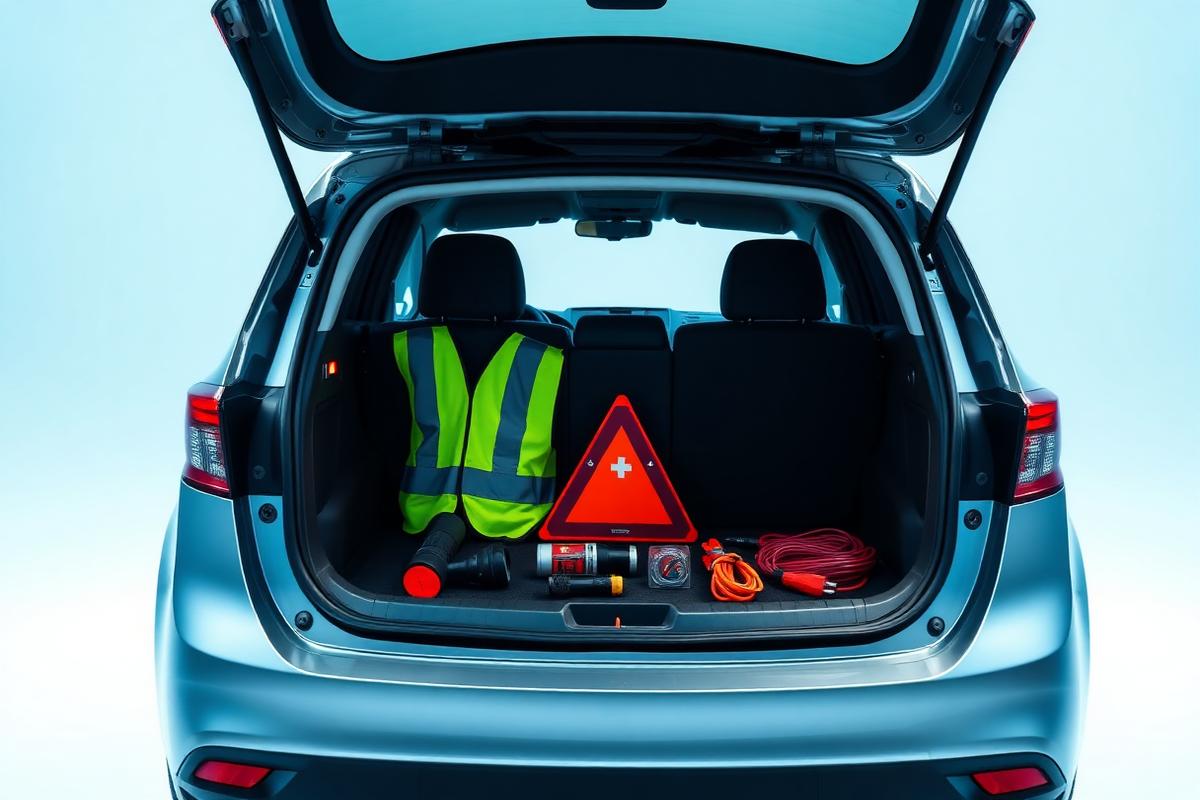
The safety basics to carry
Nothing in this list is expensive, and all of it fits in a single boot bag. The point is to make yourself visible, keep yourself warm and be able to see what you are doing.
- High-visibility vest for every regular occupant, kept in the cabin rather than the boot
- Reflective warning triangle for use where it is safe to place one, never on a motorway
- A torch with fresh batteries, plus a spare set
- A basic first aid kit and a foil blanket
- Warm layers, gloves and a bottle of water
The vehicle items worth having
Modern cars often ship without a spare wheel. Check what your vehicle actually has before you need it.
- Tyre inflator or sealant kit, and know where the locking wheel nut key lives
- Jump leads or a compact lithium jump pack
- Screen wash topped up through winter, and a de-icer and scraper
- A phone power bank and a spare charging cable
The evidence items people forget
If another vehicle is involved, the first ten minutes decide how easy the following weeks are. Keep the tools for that in the glovebox.
- A pen and a small notebook, because phone batteries fail
- A card with your insurer name and policy number
- A printed reminder of the details to exchange
Where to keep it and how often to check it
Keep the visibility items where you can reach them without getting out of the car, and the rest in the boot. Check the kit twice a year, when the clocks change, and replace anything used or out of date.
↑ Back to contentsFrequently asked questions
The insurance questions drivers ask us most
Straight answers on premiums, excess, write-offs and replacement vehicles, written by our Bristol repair team.
- Non-fault accident: what it means and what to do (UK guide)A plain-English UK guide to non-fault accidents: how liability is decided, your repair and replacement vehicle options, and the mistakes that cost drivers money.
- What to do after a car accident that wasn’t your faultThe exact steps to take at the scene, in the first 24 hours and in the first week after someone else hits your car in the UK.
- Will a non-fault accident affect my insurance? (UK)How a non-fault claim can show on your record, what happens to your premium and what to check with your insurer.
- Do I have to pay my insurance excess?When an excess applies after a non-fault accident, and the practical routes that can avoid paying one up front.
Your next steps
Based on what you have just read, these are the pages most drivers go to next.
Prefer to speak to someone now?
SAR Group is a repair-led accident support and bodyshop business, and your first point of contact after a non-fault accident. We are not an FCA-authorised claims management company: every non-fault case is handled through our authorised and regulated partner network.