What to do when someone hits your parked car
Coming back to a damaged car is horrible, and the first hour matters. Here's a calm, practical order of play, from checking the damage to getting the repair done properly.
1. Stay calm and assess the damage
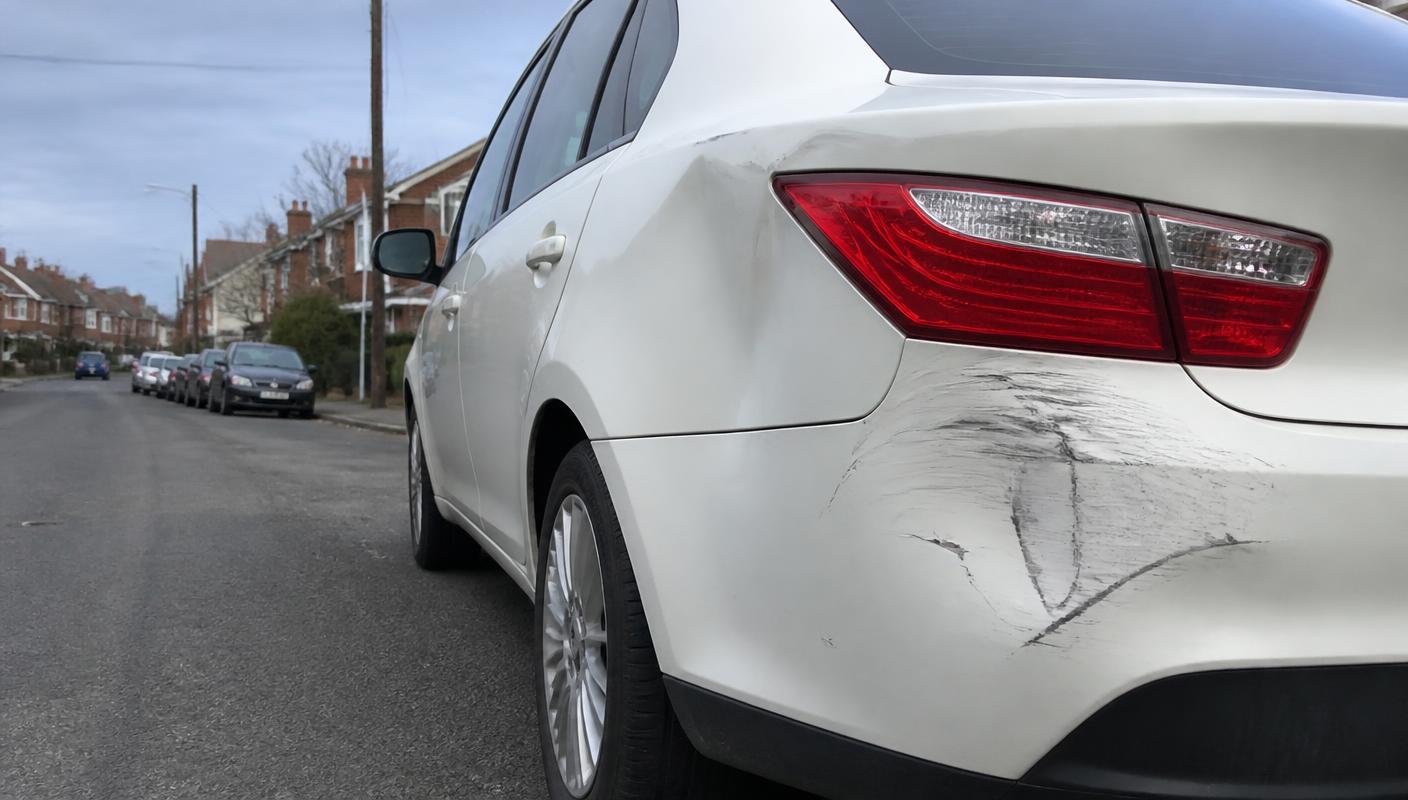
Before anything else, take a breath and look at the whole vehicle rather than just the obvious dent. Walk around it slowly. Damage from a low-speed impact often travels: a scuffed bumper corner can be hiding a cracked mounting bracket, a displaced sensor or a misaligned panel gap.
Check specifically for:
- Panel gaps that no longer line up, or doors and boot lids that catch when opened
- Cracked lamp lenses, condensation inside a light unit, or loose trim
- Fluid on the ground beneath the vehicle
- Tyre or wheel damage on the impacted side
- Warning lights on the dashboard when you start the car
If the car looks unsafe to drive, sharp protruding metal, a wheel out of line, lights not working or anything leaking, don't drive it. Leave it where it is and arrange recovery.
2. If the other driver stayed at the scene
Good news: this is the simplest version of events. Stay polite and factual, and avoid discussing blame, just exchange information. You're looking for:
- Full name, address and contact number
- Vehicle registration, make, model and colour
- Insurance company and policy number if they have it to hand
Photograph their driving licence and insurance certificate if they're happy for you to do so, and take a picture of both vehicles in position before anything is moved. If they left a note instead, photograph it straight away, paper gets lost and ink runs.
3. If the other driver drove away
Leaving the scene of an accident that caused damage without exchanging details is an offence in the UK. Report it to the police as soon as you reasonably can, you can usually report online or by calling 101, and keep the incident reference number safe. Your insurer will almost certainly ask for it.
Then think about who might have seen it. Residential streets and car parks are surprisingly well covered by doorbell cameras, shop CCTV and other vehicles' dashcams, but that footage is often overwritten within a few days, so ask early and ask politely.
4. Gather evidence: photos, CCTV, witnesses
Five minutes of evidence now saves weeks of back-and-forth later. Aim for:
- Wide shots showing the car's position, the road, markings and any signage
- Mid shots of the damaged side of the vehicle as a whole
- Close-ups of every scratch, dent and crack, ideally with something for scale
- Context, debris on the ground, paint transfer, tyre marks, nearby cameras
- Witnesses, names and phone numbers of anyone who saw it happen
Note the date, time and exact location while it's fresh, and write down anything unusual you noticed. If you have a dashcam with parking mode, download and back up the file immediately rather than leaving it on the card.
5. Report it and understand your options
Tell your insurer even if you're not sure you want to claim, most policies require notification of any incident, and telling them isn't the same as making a claim. Give them the police reference if you have one.
From there, the practical routes usually look like this:
- Through your own insurer, who manage the process end to end
- Through the other party's insurer, where the driver is identified and liability is clear
- Privately arranged repair, which some drivers prefer for smaller damage
Fault is decided between the insurers based on the evidence. What you can control is the quality of that evidence and the quality of the repair.
6. When to get repair-led support
If you're unsure how serious the damage really is, or you simply want someone to explain what happens next in plain English, talk to a repairer early. A proper assessment tells you whether the damage is cosmetic or structural, what parts are involved, and how long the work will realistically take.
That's our role at SAR Group: repair-led non-fault support. We assess the vehicle, explain your practical options, provide replacement vehicle guidance where appropriate, and carry out the repair to BSI-approved standards.
SAR Group is a repair-led accident support and bodyshop business, and your first point of contact after a non-fault accident. We are not an FCA-authorised claims management company: every non-fault case is handled through our authorised and regulated partner network.
7. Frequently asked questions
Your next steps
Based on what you have just read, these are the pages most drivers go to next.
Prefer to speak to someone now?