British weather causes a large share of avoidable damage every year. Most of it comes down to speed, following distance and a few decisions about where to drive.
Rain and standing water
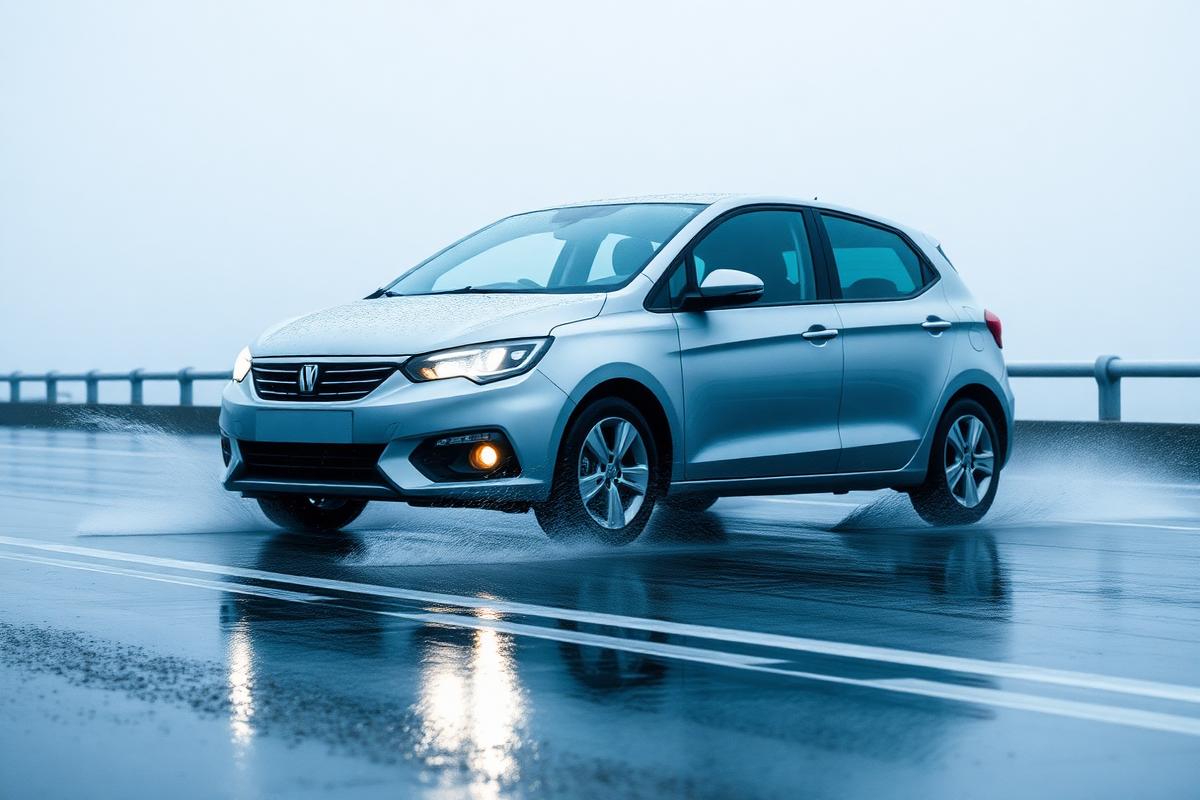
Stopping distances at least double in the wet. Aquaplaning happens when water lifts the tyre off the surface, and it feels like the steering going light.
- Double your following distance and ease off the accelerator rather than braking hard
- If the steering goes light, hold the wheel steady and do not brake until grip returns
- Never drive through floodwater of unknown depth, since even shallow water can wreck an engine
Ice, snow and frost
Clear the whole vehicle before you set off, not just a porthole in the windscreen. Snow left on the roof slides onto the glass under braking.
- Pull away in a higher gear where possible and use gentle inputs
- Watch for black ice on bridges, shaded lanes and early mornings
- Check tyre tread and pressures, since cold air lowers pressure
Salt, grit and your bodywork
Road salt accelerates corrosion, particularly on stone chips and existing repairs. Washing the underside and arches through winter is the cheapest paint protection there is.
↑ Back to contentsHigh wind and low sun
Give cyclists, motorcyclists and high-sided vehicles extra room in gusty conditions, and keep the windscreen clean inside and out for low winter sun. A smeared screen turns glare into a blind spot.
↑ Back to contentsFrequently asked questions
The insurance questions drivers ask us most
Straight answers on premiums, excess, write-offs and replacement vehicles, written by our Bristol repair team.
- Non-fault accident: what it means and what to do (UK guide)A plain-English UK guide to non-fault accidents: how liability is decided, your repair and replacement vehicle options, and the mistakes that cost drivers money.
- What to do after a car accident that wasn’t your faultThe exact steps to take at the scene, in the first 24 hours and in the first week after someone else hits your car in the UK.
- Will a non-fault accident affect my insurance? (UK)How a non-fault claim can show on your record, what happens to your premium and what to check with your insurer.
- Do I have to pay my insurance excess?When an excess applies after a non-fault accident, and the practical routes that can avoid paying one up front.
Your next steps
Based on what you have just read, these are the pages most drivers go to next.
Prefer to speak to someone now?
SAR Group is a repair-led accident support and bodyshop business, and your first point of contact after a non-fault accident. We are not an FCA-authorised claims management company: every non-fault case is handled through our authorised and regulated partner network.